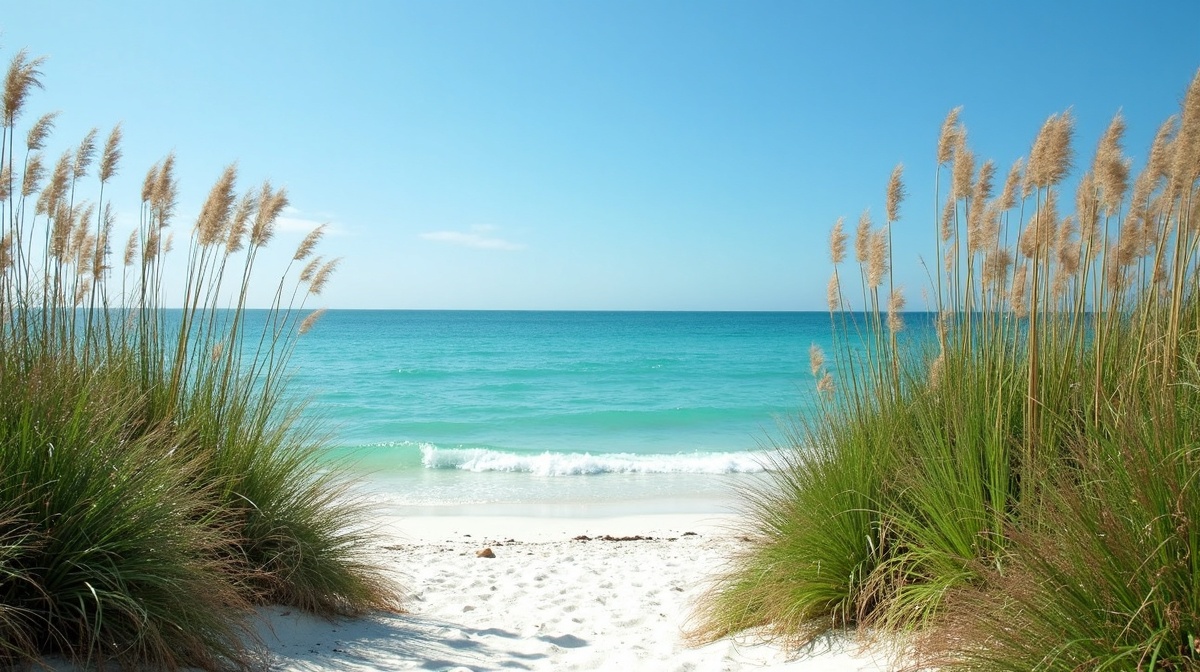

Siesta Key is one of the most beautiful barrier islands on the Gulf Coast — and one of the most demanding landscaping environments in Florida. The combination of direct salt spray, pure quartz-sand soil, turtle nesting ordinances, and some of the tightest coastal construction controls in Sarasota County makes every outdoor project here a specialist job.
Salt Air and What It Means for Materials
Within 500 feet of the beach, salt spray is continuous. Standard concrete will spall and stain within 2–3 years. Painted metals corrode. Even "weather-resistant" outdoor furniture degrades rapidly. For hardscape: travertine sealed with penetrating sealer or marine-grade porcelain are the only two pool deck materials worth specifying. For outdoor kitchens: 316 marine-grade stainless is the minimum spec — 304 stainless corrodes visibly within 18 months at this proximity to saltwater.
Soil Conditions
Siesta Key soil is nearly pure silica sand — the same material as the famous white beach. This means almost no water retention, very low nutrient content, and fast drainage. Irrigation systems need more frequent run cycles than mainland properties. Plants need amended soil beds with compost and mycorrhizal inoculants to establish.
Turtle Nesting Restrictions (May–October)
From May 1 through October 31, all exterior lighting on ocean-facing properties must comply with Florida FWC sea turtle lighting guidelines. White and blue-white lights are prohibited seaward of the coastal construction control line. Amber, red, or shielded fixtures required.