 |Your Outdoor Project, Simplified.
Florida Landscaping Permits
— Complete Guide
What landscaping projects actually require permits in Florida? County-by-county breakdown for Sarasota, Manatee, Hillsborough, and Pinellas — covering trees, fences, hardscape, irrigation, and site clearing.
Quick Reference: What Requires a Permit in Florida?
This is a general guide — requirements vary by county, municipality, and project specifics. Always verify with your county Development Services before beginning work.
Florida has some of the most complex landscaping permit requirements in the country — driven by the state's unique ecosystem protections, coastal construction zones, and aggressive stormwater management regulations. What requires a permit in Sarasota County may not in Charlotte County, and city requirements often layer on top of county requirements.
This guide covers the five major landscaping categories that most commonly require permits for Gulf Coast homeowners — with county-specific rules, contact numbers, and the key factors that trigger permit requirements for each category.
Categories Covered
We handle permit coordination
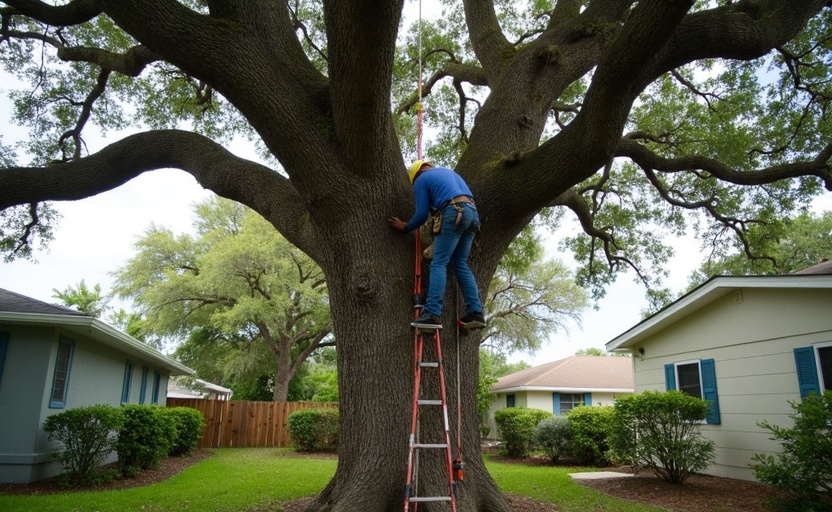
Tree Removal Permits
High EnforcementFlorida's tree protection ordinances are among the strictest in the country. Most Gulf Coast counties require permits for removing any tree above a certain diameter — and "removing" can include limbing that reduces the canopy by more than 25%.
Sarasota County
Permit required for trees 6"+ DBH (diameter at breast height). Protected species (oaks, palms over 8ft) require separate environmental review.
Manatee County
Permit required for trees 6"+ DBH. Heritage trees (24"+ DBH) require arborist certification and are rarely approved for removal.
Hillsborough County
Grand Tree permit required for trees 24"+ DBH. Standard removal permit for 6"+ DBH trees. Tampa has additional city-level requirements.
Pinellas County
Permit required for most trees 4"+ DBH. Clearwater and St. Petersburg have additional municipal-level requirements on top of county.
Charlotte County
Permit required for trees 6"+ DBH. Punta Gorda has additional protections for coastal community trees.
Key Compliance Notes
- Always measure DBH before assuming a tree is permit-free
- Penalties for unpermitted tree removal range from $500 to $10,000+ per tree
- Some tree species (Florida Live Oak, Slash Pine) have additional protection layers
- Replacement tree requirements often apply — removing one tree may require planting 2–3 replacements
Fence Installation Permits
Commonly RequiredMost Florida municipalities require building permits for fence installation regardless of material. Height limits, setback requirements, and pool barrier compliance rules vary significantly by county and HOA.
Sarasota County
Permit required for all fences. Max 4ft in front yard, 6ft in rear/side. Pool barrier fences must comply with FSSC 424 — pool barrier fence inspection required.
Manatee County
Permit required for fences over 3ft in front setback, all fences 6ft+. Pool enclosure permit required separately from fence permit.
Hillsborough County
Building permit required for all fences 6ft+. Pool barriers require life safety inspection. Tampa imposes additional restrictions on corner lots.
Pinellas County
Permit required for most fences. Coastal construction setback lines (CCCL) restrict fence placement near Gulf beaches.
Charlotte County
Permit required for all fences. Strictly enforced pool barrier requirements under Florida Building Code 454.
Key Compliance Notes
- HOA approval is required in addition to county permits in most communities
- Corner lots have more restrictive front setback requirements — sight triangle rules apply
- Pool barrier fences have specific height, self-closing gate, and latch requirements under Florida law
- Permit fees typically $75–$300 depending on linear footage and county
Hardscape & Paver Permits
Project-DependentPaver and hardscape permit requirements depend on the scope, impervious surface coverage calculations, and whether the project is near water or in a floodplain. Smaller residential paver projects often don't require permits; larger hardscape projects almost always do.
Sarasota County
Paver driveways and walkways generally don't require permits if permeable and under 200 sq ft. Pool deck pavers always require permit. Impervious surface maximums apply in most zoning districts.
Manatee County
No permit typically required for paver patios under 200 sq ft. Driveway widening triggers permit and impervious surface review. Flood zone properties require additional review.
Hillsborough County
Pool deck pavers require pool permit. Impervious surface additions must not exceed lot coverage limits. Stormwater review required for projects over 500 sq ft of new impervious surface.
Pinellas County
Barrier island and coastal zone projects trigger CCCL restrictions. Impervious surface carefully tracked — additions often require stormwater mitigation.
Charlotte County
Permit required for driveways and major hardscape areas. Permeable pavers may qualify for impervious surface exemptions.
Key Compliance Notes
- Pool deck pavers almost always require permits as part of the pool permit package
- Permeable pavers may qualify for impervious surface exemptions in some counties
- Flood zone (AE, VE) properties face much stricter hardscape restrictions
- Coastal construction setback lines restrict hardscape within 50–100ft of mean high water line
Irrigation System Permits
License RequiredIrrigation installation in Florida requires a licensed contractor in most circumstances, and new irrigation system connections to municipal water supply require permits and backflow preventer inspections.
Sarasota County / SWFWMD
New irrigation connections require permit and backflow preventer inspection. SWFWMD requires irrigation systems to have a rain sensor. New construction irrigation systems require certificate of completion.
Manatee County / SWFWMD
Backflow preventer inspection required on all irrigation system connections to municipal supply. Water use permit may be required for wells used for irrigation.
Hillsborough County / SWFWMD
Irrigation permit required for new system installation. Rain sensor legally required on all new irrigation systems. Reclaimed water systems have additional hookup requirements.
Pinellas County / SWFWMD
New irrigation system permit required. Pinellas has active water restriction enforcement — SWFWMD compliance critical. Reclaimed water mandatory in most new developments.
Charlotte County
Irrigation permit required for new systems. Well permits required for irrigation wells. Backflow preventer inspections annually in most jurisdictions.
Key Compliance Notes
- Florida law requires a licensed irrigation contractor (EI, SIC, or CIC license) for irrigation installations
- Rain sensors are legally required on all new irrigation systems — not optional
- SWFWMD watering restrictions have day-of-week rules that vary by county and season
- Reclaimed water systems require county utility hookup permit — process takes 4–8 weeks in some areas
Site Clearing & Land Disturbance
Environmental Review Often RequiredClearing land in Florida can trigger environmental reviews well beyond what most homeowners expect — particularly near wetlands, stormwater ponds, or if the property is in a mapped habitat area.
Sarasota County
Land clearing over 1 acre requires Land Clearing permit. Near-wetland buffer clearance triggers environmental review. Sarasota County enforces scrub-jay and gopher tortoise habitat protection zones.
Manatee County
Vegetation removal near jurisdictional wetlands (within 25–100ft buffer) requires environmental permit. Gopher tortoise surveys may be required for lots with suitable habitat.
Hillsborough County
Large-scale clearing (1+ acre) requires permit. Stormwater management plan required if clearing alters drainage. Protected species surveys may be triggered.
Pinellas County
Coastal clearing restrictions are significant — CCCL and mangrove protections are strictly enforced. Any clearing near tidal waters requires environmental pre-screening.
Charlotte County
Site plan approval required for lots over 1 acre. Charlotte County actively enforces exotic vegetation removal requirements for certain zoning districts.
Key Compliance Notes
- Gopher tortoise is a protected species — surveys required before clearing on qualifying properties
- Wetland mitigation may be required if clearing encroaches on jurisdictional wetlands
- SFWMD and SWFWMD both have jurisdiction over certain wetland areas
- Mangrove trimming and removal is regulated by separate state statute (F.S. 403.9326)
Florida Landscaping Permits — FAQ
Common questions from Gulf Coast homeowners about permit requirements for landscaping projects
Project Guides Series
More Gulf Coast Research Guides
Artificial Turf Cost in Florida
Full price breakdown: per sq ft, installation, infill, and drainage. What drives cost differences across Gulf Coast counties.
Pool Deck Cost in Florida
Travertine, porcelain, concrete, and paver pool deck cost comparisons for Sarasota and Tampa Bay homeowners.
Sod Installation Cost
Floratam vs Zoysia vs St. Augustine pricing guide. Per-pallet and per-sq-ft cost for Florida Gulf Coast installs.
Best Time to Install Sod in Florida
Month-by-month sod install timing guide for Gulf Coast Florida — rainy season, establishment, and winter considerations.
Related Landscaping Resources
Tampa Bay to Venice, FL Licensed Contractor Network Florida-Specific Expertise
The SunWest editorial team draws on direct field experience coordinating outdoor living, hardscape, and landscape projects across Sarasota, Manatee, Hillsborough, and Pinellas Counties — including barrier island work on Siesta Key, Longboat Key, and Anna Maria Island. Our content combines real project pricing, Florida code references, and material performance data to help Gulf Coast homeowners make better-informed decisions.
We Handle the Permits. You Get the Yard.
SunWest coordinates permit applications through our vetted contractor network. You don't have to navigate the county process alone — we handle it as part of your project.
Serving Sarasota, Manatee, Hillsborough, and Pinellas counties. Free estimates, 24-hour response.